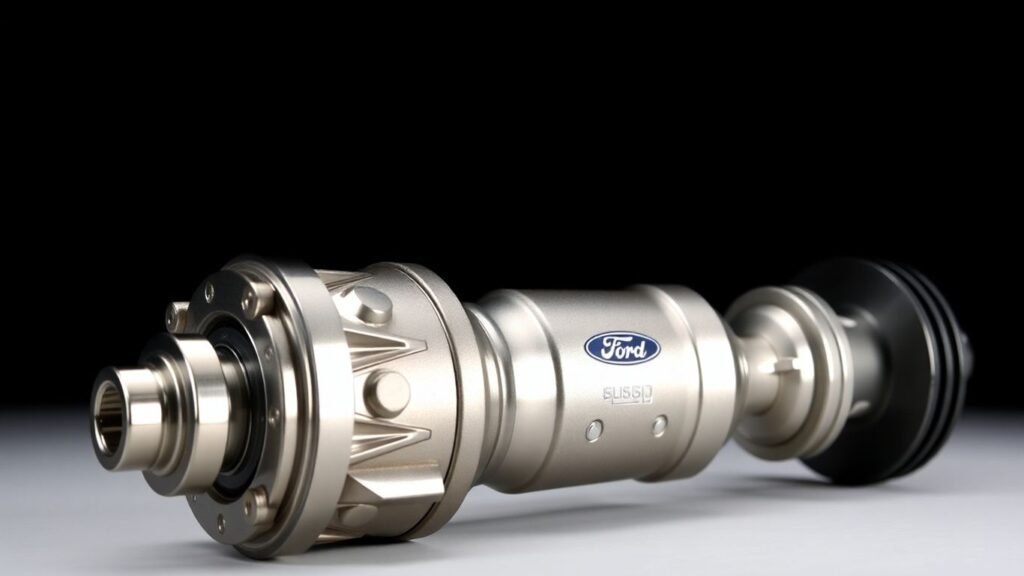
So, you’ve got a Ford and you’re thinking about making it faster or tougher? That’s awesome. But here’s the thing: just slapping a bigger engine on it won’t cut it if the rest of the drivetrain can’t keep up. You gotta think about the parts that actually get the power to the wheels. We’re talking about the stuff that makes your Mustang hook up or your F-150 handle a load. Upgrading these Ford driveline parts is key to making sure all that extra power actually does something useful, instead of just breaking things.
Key Takeaways
- Upgrading your Ford’s driveline components is just as important as engine mods if you want real performance gains and reliability.
- For Mustangs, stronger half shafts are a common upgrade, especially when adding power, to handle more torque and prevent issues like wheel hop.
- When looking at driveshafts, materials like DOM steel, aluminum, and carbon fiber offer different benefits depending on your needs, from durability to weight reduction.
- Don’t forget about other Ford driveline parts like differentials and torque converters; they play a big role in how your vehicle launches and handles traction.
- Proper installation and ongoing maintenance are vital for any driveline upgrades to work right and last.
Enhancing Your Ford’s Driveline Components
When you’re pushing your Ford to its limits, whether it’s for a weekend cruise or serious towing, the driveline is what makes it all happen. It’s the system that gets the power from your engine all the way to the wheels. If your engine is making more power than it did from the factory, the stock driveline parts might not be up to the task. Think of it like this: a super strong engine hooked up to weak axles is just asking for trouble. You’ll end up with parts breaking, and that’s never fun. Making sure your driveline can handle the extra grunt is just as important as the engine itself.
Understanding Driveline Strength for Increased Power
If you’ve added a supercharger or just like to drive aggressively, your driveline is taking a beating. The parts that transfer power, like driveshafts, U-joints, and axles, are constantly working. When you add more horsepower and torque, these parts have to work even harder. For lifted trucks or vehicles with a lot of suspension travel, the angles on the driveshaft can get pretty extreme, which puts even more stress on the joints. Upgraded components are often built with thicker materials and better joint designs to handle these tougher conditions. It’s all about making sure that power actually reaches the ground without anything snapping.
Key Driveline Parts for Performance Gains
There are several areas where upgrades can make a big difference. Driveshafts are a prime example; beefier tubing can handle more abuse. U-joints and CV joints are also critical, especially for off-roaders or drag racers, as they allow for movement while still sending power. Differentials are another big one. Upgrading to a limited-slip or locking differential can dramatically improve traction, meaning less wheel spin and more go. Even something like a torque converter can be changed to give you a more aggressive launch from a standstill. These parts work together to make your Ford perform better.
The Importance of Driveline Integrity
Keeping your driveline in good shape is really about reliability. If one part fails, it can often take other parts with it, leading to a much bigger and more expensive repair job. Maintaining the integrity of your driveline means choosing parts that are built to last and designed for the kind of performance you expect. It’s about having confidence that your truck or car can handle whatever you throw at it, whether that’s a long haul with a heavy load or just spirited driving on your favorite road. A strong driveline is the backbone of a high-performing Ford.
| Component | Stock Capability | Performance Upgrade Benefit |
|---|---|---|
| Driveshaft | Moderate Torque | Increased wall thickness, stronger joints for higher loads |
| Axles | Standard Load | Robust materials, larger diameter for extreme torque |
| Differential | Open Traction | Limited-slip or locker for improved grip on all surfaces |
| U-Joints/CV Joints | Standard Angles | Heavy-duty construction for extreme operating angles |
Upgrading Mustang Half Shafts for Superior Performance
Essential Half Shaft Upgrades for Mustang Owners
If you’ve pushed your Mustang beyond its factory limits, especially with added horsepower from a supercharger or sticky tires for drag racing, your stock half shafts might be the weak link. These components are what get the power from your transmission to the wheels, and when they can’t handle the torque, you’re looking at potential breakage and a very frustrating day. Upgrading them is a smart move to make sure all that power actually makes it to the ground without leaving you stranded.
Benefits of Billet Material and Robust Axle Shafts
When you’re looking at aftermarket half shafts, you’ll notice a big difference in materials. Stock shafts are often made from cast materials, which are fine for everyday driving. However, for performance applications, you want something tougher. Many performance half shafts use CNC-machined billet centers and stronger axle shafts. This means they’re built to withstand much higher torque loads and the stresses of aggressive driving. This upgrade is critical when adding a supercharger or using sticky tires for drag racing. Think of it as giving your Mustang’s drivetrain the muscle it needs to handle the extra grunt.
Choosing the Right Half Shaft Kit for Your Needs
Picking the right kit really depends on what you plan to do with your Mustang. If you’re hitting the drag strip regularly, you’ll want a heavy-duty kit designed for severe use. For those who have made some modifications but aren’t necessarily drag racing, there are still plenty of robust options that offer a significant improvement over stock without being overkill. Always check that the kit is compatible with your specific Mustang year, model, and hub setup. Reading reviews and checking the manufacturer’s warranty can also give you peace of mind.
Upgraded half-shafts provide enhanced strength and durability compared to stock versions. They are designed to handle higher torque and power outputs, minimizing the risk of breakage during performance driving. Additionally, these upgrades improve handling and responsiveness, ensuring a smoother ride while maximizing your Mustang’s overall performance potential.
Optimizing F-150 Driveline for Off-Road and Towing
Improving F-150 Handling with Performance Suspension
When you’re hitting the trails or hauling a heavy load, the stock suspension on your F-150 might feel a bit soft. Upgrading your suspension components can make a big difference in how your truck handles rough terrain or keeps its composure when towing. Think about beefier shocks and springs that can soak up bumps better and keep your tires planted. This isn’t just about comfort; it’s about control. Better suspension means less body roll when cornering and more stability when you’re off the pavement or dealing with a trailer.
Fuel System Upgrades for Demanding Conditions
If you’ve added more power to your F-150, or if you’re frequently pushing it hard, the stock fuel system might not keep up. You might notice sluggish acceleration, especially when the truck is under a load. This is often a sign that the engine isn’t getting enough fuel. Upgrading the fuel pump or injectors can make sure your engine gets the fuel it needs to perform at its best, whether you’re climbing a steep grade or just trying to pass someone on the highway.
Signs You Need to Upgrade Your F-150 Fuel System
It’s not always obvious when your fuel system needs a tune-up. However, a few common indicators point to potential issues. If your truck hesitates or stumbles when you hit the gas, especially after you’ve made other performance modifications, that’s a red flag. You might also notice a drop in fuel economy, or the engine might run rougher than usual. Sometimes, you can even hear the fuel pump working harder than it should. Ignoring these signs can lead to more serious engine problems down the road.
A well-maintained and properly upgraded fuel system is key to getting the most out of your F-150, especially when you’re asking it to do tough jobs like off-roading or heavy towing. It ensures the engine receives consistent fuel delivery, which translates to reliable power and better overall performance under stress.
| Stock Spec (5.0L V8) | Typical Upgrade Benefit |
|---|---|
| 400 HP | +50-100+ HP (with other mods) |
| 410 lb-ft Torque | +40-80+ lb-ft (with other mods) |
| 13,000 lbs Towing | Improved stability and control |
| 5.4s 0-60 | Quicker acceleration off the line |
Selecting the Right Driveshaft Materials
DOM Steel for Durability
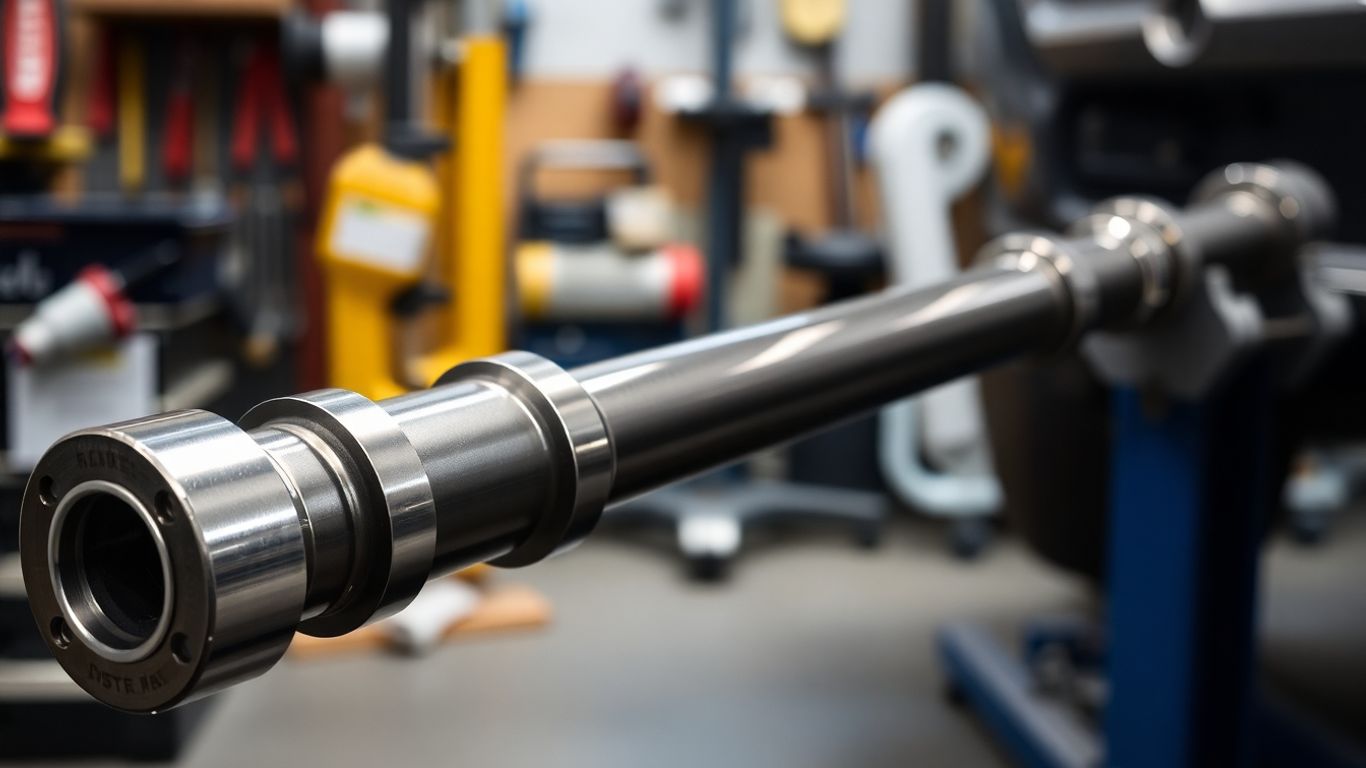
When you’re looking to upgrade your Ford’s driveshaft, the material it’s made from really matters. For a lot of everyday drivers and even some hot rod builds, DOM steel is a solid choice. DOM stands for Drawn Over Mandrel, and it means the steel tubing is made using a process that results in a really strong, seamless tube. This makes it tough and able to handle a good amount of stress, which is what you want when you’re putting more power down. It’s a good balance of strength and cost, making it a popular option for many Ford owners who need something reliable without breaking the bank.
Aluminum for Reduced Rotating Mass
If you’re chasing quicker acceleration and want to shave off some weight, aluminum driveshafts are where it’s at. Think about it: the driveshaft spins pretty fast, so reducing its weight means less rotational mass. Less rotational mass means your engine doesn’t have to work as hard to get it spinning, which translates to a snappier throttle response and faster acceleration. Aluminum is lighter than steel, but it’s still strong enough for many performance applications. It’s a great way to get a little extra pep out of your Ford, especially if you’re doing more spirited driving.
Carbon Fiber for Elite Racing Applications
Now, if you’re really serious about performance, like for track days or serious racing, carbon fiber is the top-tier material. Carbon fiber has an incredible strength-to-weight ratio. This means it’s super strong but also incredibly light. For racing, every bit of weight savings counts, and a carbon fiber driveshaft can make a noticeable difference. It’s also really good at handling high RPMs and the kind of abuse that comes with competitive driving. Of course, this level of performance comes with a higher price tag, but for those pushing their Fords to the absolute limit, it’s often worth the investment.
Choosing the right driveshaft material isn’t just about picking the strongest option; it’s about matching the material’s properties to how you use your vehicle and what you want to achieve. Think about your driving style, your power goals, and your budget. Getting this right means your driveshaft will perform well and last a long time.
Achieving Peak Performance with Ford Driveline Parts
So, you’ve got a Ford that’s putting down some serious power, or maybe you’re planning to. That’s awesome, but you can’t just slap more horsepower at the engine and expect the rest of the car to keep up. The driveline is what actually gets that power to the wheels, and if it’s not up to the task, you’re going to have problems. Think of it like this: your engine is the muscle, but the driveline is the skeleton and nervous system. Everything needs to be strong and work together.
The Role of Transaxles and Transfer Cases
These units are pretty important for directing power. In some Fords, especially those with all-wheel drive or front-wheel drive, the transaxle handles both the transmission and the differential. If you’re pushing a lot more power, the stock transaxle might not be able to handle the extra stress. Similarly, if you have a truck or SUV with four-wheel drive, the transfer case is what splits power between the front and rear axles. Upgrading these can mean better gear ratios for acceleration or towing, and often, they’re built tougher to handle more abuse.
Differential Upgrades for Enhanced Traction
This is where you really feel the difference in how your Ford puts power down. A standard open differential sends power to the wheel with the least resistance. That means if one wheel is in the air or on ice, it just spins, and the other wheel doesn’t get any power. Not ideal. Upgrading to a limited-slip differential (LSD) or a locking differential means both wheels on an axle get power, even if one has less grip. This is a game-changer for traction, whether you’re launching hard, cornering, or driving on slippery surfaces. It makes your Ford much more predictable and capable.
Torque Converters for Aggressive Starts
If your Ford has an automatic transmission, the torque converter is the link between the engine and the transmission. The stock torque converter is designed for smooth, everyday driving. But if you want quicker acceleration and a more immediate feel when you hit the gas, an upgraded torque converter is a good move. They can be built to stall at higher RPMs, meaning the engine revs up more before it starts sending power to the wheels. This translates to a harder launch and a more aggressive feel off the line. It’s a pretty direct way to make your Ford feel more responsive.
When you’re looking at driveline upgrades, it’s not just about buying the strongest parts. You need parts that work together. A beefier driveshaft won’t do much good if your differential can’t handle the power it’s sending. It’s all about building a system where each component supports the others, so you don’t end up with a weak link that breaks under pressure. Think about how you use your Ford – is it for drag racing, towing, or just spirited street driving? That will help you pick the right balance of strength and weight for your specific needs. Getting the right gear ratios in your differentials, for instance, can make a huge difference in how your truck or car performs in different situations. It’s about making sure all those parts are singing the same tune.
Ensuring Seamless Installation and Support
So, you’ve picked out the perfect driveline parts to get your Ford running like a beast. That’s awesome! But getting them installed right is just as important as picking them out. Nobody wants their truck or Mustang sitting in the garage longer than it needs to, right? It’s all about making sure everything fits and works together without a hitch.
Preparation and Installation Assistance
Before you even think about turning a wrench, take a good look at the instructions. Seriously, read them all the way through. Gather up all the tools you’ll need. Sometimes, a little bit of prep work can save you a huge headache later on. If you’re not totally sure about a step, don’t guess. Most good parts suppliers have phone support or even video guides to walk you through it. It’s way better to ask a quick question than to mess something up and have to start all over.
Getting the measurements right before you buy is a big deal. If the part doesn’t fit correctly from the start, installation can turn into a real chore, costing you more time and money.
Post-Installation Checks and Maintenance
Once everything is bolted up, you can’t just forget about it. You need to check your work. Make sure the driveline looks aligned and that there aren’t any weird noises or vibrations when you first start the engine and take it for a slow spin. Keep an eye on things for the first few drives. After that, just stick to a regular maintenance schedule. Checking things like U-joints and making sure everything is still tight will keep your upgrades performing well for a long time.
Finding Reliable Partners for Ford Driveline Parts
When you’re looking for these parts, it helps to work with companies that know their stuff. Think about places that have been around for a while and actually understand performance Fords. They can help you figure out exactly what you need, not just sell you a generic part. Good support means they’ll be there if you have questions during installation or down the road. It’s like having a mechanic friend who’s always got your back. They can also help you find other parts that will work well with your new driveline components, making the whole process smoother.
Putting It All Together
So, you’ve looked at the parts that make your Ford’s driveline tick, from the driveshafts to the differentials. Upgrading these components isn’t just about making your truck look cool; it’s about making sure all that power you’ve added actually gets to the wheels without breaking anything. Think of it like building a strong chain – you don’t want a weak link to ruin the whole thing. Whether you’re hitting the drag strip or just want a more solid feel on the road, getting the right driveline parts means your Ford will perform better and last longer. Take the time to pick out quality parts that fit your specific needs, and you’ll be rewarded with a much more capable and enjoyable driving experience.