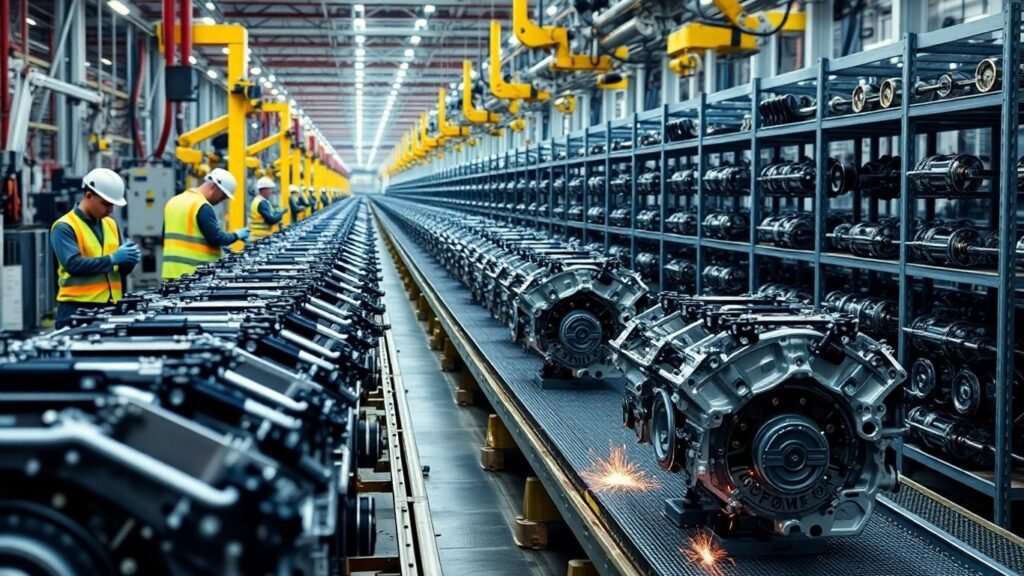
Ever wonder who makes the engines that power your Ford? It’s not just one company, but a network of partners. This article takes a look at what it takes to be a Ford engine supplier, from how they’re picked to what they actually have to do. We’ll also touch on how these suppliers help Ford build better trucks and cars, and what it means for you when you’re out on the road.
Key Takeaways
- Ford picks its engine suppliers based on strict criteria, looking at cost, manufacturing ability, and how much they can produce. Long-term deals are common, with suppliers needing to meet performance goals.
- A Ford engine supplier must be good at making parts precisely, assembling them correctly, and meeting targets for power, fuel saving, and how long the engine lasts. They also need to be ready with software and security.
- The whole process of getting engines and parts to Ford factories involves careful planning, with suppliers often working closely with Ford on new engine tech like turbocharging and hybrid systems.
- Ford manages risks by working with multiple suppliers and having backup plans. They also expect suppliers to be financially stable and able to react quickly if there are problems with parts.
- Suppliers also need to meet Ford’s goals for being environmentally friendly, like reducing their carbon footprint and using materials responsibly. This affects how easily you can get your car fixed later on.
How Ford Chooses Its Engine Supplier Partners
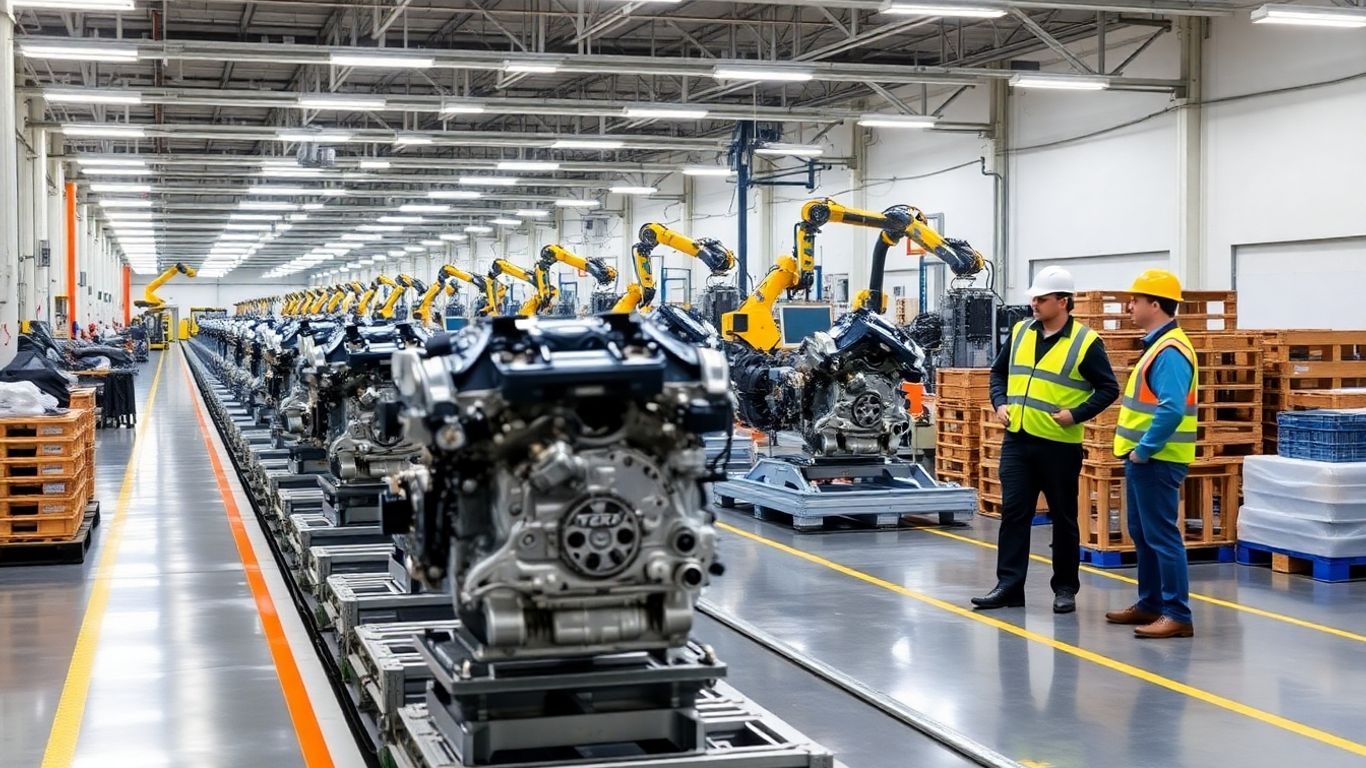
Ford doesn’t pick an engine partner on a hunch. It’s a slow, methodical sort of courtship that starts on the factory floor and ends in spreadsheets. The yardstick is simple: repeatable quality at scale, with honest costs and low risk.
Sourcing Criteria That Define A Ford Engine Supplier
The short version is that the plant has to prove it can hold tight tolerances all day, not just on a demo part. That means stable casting or forging inputs, precise machining, clean assembly, and hard data to back it up. Auditors look for capable processes (statistical control on key dimensions), clean rooms where they matter, leak-test rigor, and full traceability from heat lot to final serial number. They want to see APQP done properly, PPAP on time, and Run@Rate that hits the booked volume without a hero shift.
Certifications are a floor, not a trophy. IATF 16949 for quality management is expected, along with ISO 14001 for environment and often ISO 45001 for safety. Cybersecurity controls for connected equipment and production data get a closer look now, especially where engine ECUs, calibration flashes, or test benches touch networks. On the compliance side, content rules (like USMCA), trade exposure, labor standards, and supplier sub-tier transparency are all part of the file.
Capacity isn’t just a number; it’s a plan. Reviewers ask for headroom above forecast, tooling maintenance schedules, metrology calibration logs, and spare-parts strategies. If the line needs new fixtures or cutters to hit a new bore finish, they expect the capital plan right there in the deck.
Buy the process, not the part. Engines are built by routines and records more than by machines alone.
Balancing Cost, Capability, And Capacity
The lowest quote doesn’t always win. Ford models total landed cost: piece price, freight, tariffs, currency swings, scrap and rework risk, even warranty exposure. Then it stacks that against what the factory can actually hold—things like CpK on critical features, leak-rate benchmarks, and cleanliness specs that keep bearings and injectors happy. Finally, it checks whether the site can run today’s plan and still absorb launch spikes, line stoppages, or a last-minute running change.
| Factor | Typical measure | Target guide |
|---|---|---|
| Total cost vs. risk | Landed cost after logistics and duties | Within 3–5% of lowest risk-adjusted quote |
| Process capability | CpK on critical dims; leak rate; cleanliness | ≥1.67 on criticals; <10 sccm leaks; <10 mg/part debris |
| Capacity and uptime | Daily units; OEE; capacity headroom | OEE ≥85%; 15–20% headroom above peak plan |
| Delivery performance | On-time to request; lead time | ≥98% on-time; stable lead time with buffer plan |
If a supplier needs new grinders, torque tools, or vision systems to reach these targets, Ford weighs that capital against the long-term piece price curve. It’s a straight trade: tighter processes now for fewer headaches later.
Long-Term Contracts And Performance Benchmarks
Most awards run for multiple years, and the paperwork reads like a marriage with bank statements. Price curves include year-over-year reductions, index links for metals and energy, and rules for reopening talks if something big swings. Tooling ownership is spelled out, as are service-part obligations that last long after a model ends. Data access, cybersecurity rules, and safe-launch protocols live right next to penalties and bonuses.
Scorecards keep the pressure steady. Reviews are frequent early in a launch, then settle into a rhythm once the build stabilizes. The metrics are simple and hard to argue with.
| KPI | Typical target | Review cadence |
|---|---|---|
| Defect rate (PPM) | <10 PPM to plant | Monthly |
| On-time delivery | ≥98% | Weekly during launch; monthly steady state |
| Warranty returns per 1,000 engines | <0.5 | Quarterly |
| Cost reduction (YoY) | 2–3% | Annual true-up |
| PPAP and Run@Rate on time | ≥95% of gates met | Gate-based reviews |
When a partner keeps hitting these marks, volumes grow and programs follow. Miss them, and second sources get louder in the conversation.
What A Ford Engine Supplier Must Deliver
Precision Machining, Casting Quality, And Assembly Discipline
The work starts long before the engine fires for the first time. Castings need clean metal, stable cores, and tight control of porosity, or the rest of the build turns into damage control. Melt chemistry, heat treatment, and core alignment sound like foundry trivia, but they decide whether a block keeps its shape under heat and pressure or walks out of spec after a few hours on a dyno.
CNC lines then chase microns, not millimeters. Bore geometry, deck flatness, and cam bores get measured in-process, with any drift flagged right away. Cleanliness is treated like a spec, not a wish. Residual grit or chips left in oil galleries show up months later as scored bearings and angry customers. Assembly is the final filter. Torque-to-angle tools record every critical fastener, sealants are applied by pattern, and leak tests aren’t a formality. A single missed dowel or flipped ring pack can sink a whole batch.
If the metal and the measurements aren’t right, nothing that follows will save the engine.
One crooked bore or a hidden pore can turn a cheap part into an expensive warranty claim, fast.
Power, Efficiency, And Durability Targets
Engines earn their keep on the road, not on paper. Power per liter matters, but it has to arrive early in the rev range and hold steady when the weather turns and the trailer’s hooked up. Fuel burn is tracked by the gram and mapped cell by cell. Knock control, cooling margins, and turbine speeds are watched like a hawk so the curve stays repeatable at altitude, in heat, and on winter fuel. Oil consumption, blow-by, and deposits get the same attention, because today’s small turbos won’t forgive lazy ring packs or weak PCV plumbing.
Durability is a grind. Hours-long dyno cycles beat on bearings, chains, belts, and valve gear, with start-stop abuse and hot soaks that feel mean on purpose. Field goals tie back to those benches: long-life spark plugs that actually last, timing sets that don’t rattle, aftertreatment that lights off clean and keeps its margin years down the road. The target isn’t a hero pull; it’s a powertrain that feels the same at 120,000 miles as it did at 12,000.
| Parameter | Typical target range or practice |
|---|---|
| Power density (gas turbo) | 70–100 kW/L with a broad torque plateau |
| Peak BSFC (gas) | 220–260 g/kWh at best-efficiency island |
| Oil consumption | < 0.3 g/kWh after stabilization or < 0.5 L/1,000 km |
| Emissions margin | Calibrated headroom above legal limits for life-of-vehicle |
| NVH idle character | Stable idle with minimal boom; no intrusive tones under load |
| Durability | 300–500 hours dyno endurance plus road cycles reflecting tow, cold, and high-altitude use |
| Warranty field rate | Low ppm levels with fast containment when trends appear |
Software, Calibration, And Cybersecurity Readiness
Modern engines run on code just as much as fuel. The control unit has to manage air, spark, fuel, boost, and thermal systems in real time without hunting or hesitating, and it has to do it on different fuels and in different climates. Cal teams build maps for cold starts, towing, high altitude, and blends like E10 through E85 or B20, then prove them on benches with hardware-in-the-loop before a car ever sees the track. OBD logic must catch misfires, evap leaks, and sensor drift without false flags, and it needs to pass regulatory audits without drama.
Security sits right beside drivability now. Firmware should be signed, bootloaders locked, and updates packaged for safe flashing in a plant or over the air. Network traffic on CAN or Ethernet gets filtered and checked for tampering, with clear keys and a plan to rotate them. A supplier that can share a software bill of materials, respond to a new CVE without panic, and trace calibration versions to every engine build will save a lot of weekend fire drills later.
Inside The Powertrain Supply Chain That Feeds Ford
The engine you hear at a stoplight started life weeks earlier as a mix of metal, math, and time windows measured in minutes.
From Foundry To Final Assembly
Castings set the tone. Molten iron or aluminum gets poured with tight chemistry, and a lot can go wrong before the metal cools. Cores have to line up. Porosity has to stay under control. Once solid, blocks and heads head into machining where cutters chase tolerances you can feel with a fingernail. Deck flatness, bore geometry, valve seats—each step leaves a data trail. Heat-treat and shot-peen work harden parts where stress likes to hide. It’s not glamorous, but skipping one washer or missing one burr can ruin an engine.
Short blocks come together with crank balancing, bearing clearances checked by gauge and sometimes old-school plastigage as a sanity check. Cylinder heads arrive with valves set and guides sized. Then come the gaskets, fasteners, and torque-angle sequences that build muscle memory into the line team. Sealant beads are measured by camera. Oil and coolant circuits get leak-tested. Some plants cold-test with electric motors; others hot-test a sample on stands. The last stop is end-of-line where timing, fueling, and OBD readiness get a final look before the engine gets married to a VIN downstream.
| Stage | Typical process time | First-pass yield (representative) |
|---|---|---|
| Casting (block/head) | 6–18 hours including cooling | 92–97% |
| Machining (block/head) | 3–6 hours total across cells | 97–99% |
| Short/long-block assembly | 45–120 minutes | 98–99.7% |
| End-of-line test | 2–10 minutes | 99.5%+ |
Just-In-Time Logistics For Engines And Components
Plants don’t keep days of inventory because that ties up cash and space. They run on call-offs that ask suppliers to ship to the hour. It sounds tidy on a slide, but at 3 a.m. in January when a storm shuts an interstate, it’s a scramble. So the system uses layered buffers: a few hours of parts at the line, a bit more in a market cross-dock, and rolling safety stock inside trailers.
Engines move by truck to assembly plants on a rhythm that matches the build mix. A plant might pull V6 and V8 pallets in different ratios by shift, and the route planner has to hit those curves without stacking engines in a corner. Returnable containers are a quiet hero here. They protect machined surfaces, lock in orientation for robots, and come back folded, tracked by barcodes.
| Flow item | Replenishment cadence | On-site buffer target |
|---|---|---|
| Cylinder heads | Every 60–120 minutes | 2–4 hours |
| Blocks (machined) | Every 90–180 minutes | 3–6 hours |
| Turbochargers | Every 120–240 minutes | 4–8 hours |
| Finished engines to vehicle plant | Every 30–90 minutes | 2–4 hours |
When the plan breaks, expediters switch modes. Rail gives way to team-driver trucks; in tight spots, small batches fly. No one likes it, but late trucks cost more than fast planes. The quiet win is to spot the wobble a day early, pull ahead on a calm lane, and never need the drama.
Traceability, Data Integrity, And Part Provenance
Every engine is born with a serial that ties into a manufacturing record. Laser marks, QR codes, and sometimes RFID tags link the casting lot, machine cell, torque trace, cam phaser batch, injector flow class, and even the software calibration ID. A quality engineer can pull a timeline and watch the engine get built, step by step. That’s not for show; it’s how you sort a field issue in hours, not weeks. Every engine can be traced from melt chemistry to the VIN it powers.
Data lives longer than the warranty. Plants keep torque-angle curves, leak test graphs, and bore size measurements for years. Suppliers send Advanced Ship Notices with lot IDs so the plant knows what arrived before the truck door opens. If a fastener lot turns out soft, backward trace finds the affected engines, forward trace finds the vehicles, and containment locks them before they ship. Cyber controls matter too. You don’t want a calibration server open to the world or a barcode station writing bad IDs because someone clicked a random link.
Provenance also covers material truth. Foundries store melt logs. Heat numbers live on certs. Recycled content percentages are recorded for audits. It’s not just paperwork; it’s how you keep parts honest when ten vendors make the same bolt and only one of them had a furnace drift last Tuesday.
Innovation And R&D Collaboration With The Ford Engine Supplier
R&D work between Ford and its engine supplier isn’t a handoff; it’s a loop. Design ideas move from simulation to dyno cells to road data and back again, sometimes in a single week when programs get tight. Speed from idea to validated hardware is the real currency. More than once, a cam profile looks golden in CAD and then trips over knock limits on hot fuel, so the team reshapes it overnight and tries again before the coffee gets cold.
When both sides share a clean data model and a common test language, the arguments shrink, the fixes land faster, and the engine gets better without the drama.
Co-Developing Turbocharging, Fuel Systems, And Materials
Turbo work starts with the ugly trade-offs: quick spool versus backpressure, thermal headroom versus package space, and cost versus exotic alloys. The supplier brings turbine and compressor maps, Ford brings transient drive-cycle targets, and they chase that sweet spot where boost shows up early without cooking the manifold. Fuel systems are just as touchy. Raise injection pressure and you buy finer droplets, but you also raise pump load and noise, so calibration has to earn every bar. Materials are the quiet heroes here. Think compacted graphite iron where strength matters, aluminum with smart heat paths in heads, and low-friction coatings on rings and tappets to keep wear in check when cold starts pile up.
| Development Checkpoint | Typical Target Window | Why It Matters |
|---|---|---|
| Boost rise to 1.5 bar (3rd gear, 1,500–3,000 rpm) | 1.6–2.0 s | Feels quick without lugging the engine |
| Turbine inlet temp limit | 980–1050 °C | Keeps housings and valves alive under tow |
| Injector pressure (GDI) | 200–350 bar | Mixes fuel cleanly at low temps |
| BSFC improvement across mid-load | 3–5% | Cuts fuel burn where drivers live most |
| PN/NOx regulatory margin | +15–25% | Room for real-world heat and altitude |
On the bench, a “perfect” spool trace can hide surge or whistle, so microphone arrays and shaft-speed sensors settle arguments that used to linger for weeks. If a turbo runs hot, the material team swaps in a higher-temp austenitic grade or a better heat shield, and the calibration team trims spark and lambda only after the hardware earns it.
Hybrid And EV Propulsion Integration
Hybrids change the playbook. The engine isn’t the solo act anymore; it’s a teammate that hands torque to an e-machine without tripping over driveline clunks or catalyst light-off. Late intake valve closing and cooled EGR help the engine sip fuel under light loads, while an e-booster covers the soggy zone where a small turbo would lag. Calibration focuses on the handoff moments—creep in traffic, small throttle stabs at 30 mph, and full tilt freeway merges—because that’s where rough edges show up first.
When the supplier also builds e-axles or hybrid modules, the talk shifts to inverter heat, gear whine orders, and oil systems that cool both windings and bearings. Range-extender layouts add another layer: keep the engine in its sweet BSFC island, mute the start-stop shake, and plan service so the unit lives long stretches at steady rpm without glazing cylinders. It’s not glamorous, but getting those details right makes the whole car feel calm and honest.
Protecting Intellectual Property And Test Data
Both sides carry trade secrets to the table, so the rules have to be clear before the first prototype fires. Background know-how stays with the owner, joint inventions get shared, and anything time-stamped in lab notebooks or PLM is tagged so it doesn’t wander. Data moves through gated portals with role-based access, and sensitive models ship as compiled binaries or black-box ECUs when needed. Test reports are hashed and archived with change logs, because nobody wants a debate six months later about which injector set was in cylinder four. Cyber-hygiene matters too. Source code comes with a software bill of materials, dyno rigs are kept off public networks, and calibration drops get signed so a stray laptop can’t slip a bad map into a good engine.
Risk Management In Ford’s Engine Sourcing Strategy
Dual Sourcing And Regional Redundancy
Ford doesn’t like single-threaded supply. For major engine families, drawings, bills of material, and test specs are written so two qualified plants can make the same part without drama. That means mirrored machining steps, common gauges, and calibration files that drop in cleanly. Plants run periodic bank-builds and surge drills to prove the second source isn’t just a name on a slide. Buffers are measured in hours at the vehicle line and days at the engine plant, so lane choice matters; ocean if steady, air if something breaks.
No single plant is allowed to be a single point of failure for a high‑volume engine.
When a storm, strike, or power cut hits one region, production shifts to the backup site and pre-approved air freight bridges the gap while banked engines keep final assembly moving.
Financial Health, Tooling Ownership, And Continuity Plans
Engines die fast on cash hiccups upstream. So Ford tracks supplier liquidity, debt load, and payables stretch, plus simple tells like missed maintenance or late scrap pickup. If stress pops up, there’s a playbook: shorter payment cycles, directed buys for raw stock, or moving work to the alternate line before a stop hits. Tooling is a big deal here. Critical dies and fixtures carry Ford title, have serials, and sit on a controlled ledger. CAD, programs, and work instructions are escrowed so another site can pick up if a plant goes dark. Duplicate tools are validated with run-at-rate, not just a promise. Continuity plans include banked safety stock ahead of model change, hot starts for backup cells, and clear access rights to pull tools if a receiver walks in.
Rapid Response To Quality Holds And Field Issues
When quality wobbles, the clock starts. Suspect engines get locked down by serial number, lot, machining cell, even torque trace files. A first report lands within hours, while containment and sort run in parallel at the plant, in transit, and at dealers for service engines. Root cause follows a tight method: problem statement, data check, fix, and only then a controlled release. Service parts get priority so dealers aren’t stuck. If the issue sits in software, a new calibration can ship with clear change notes and a small-scale pilot before full rollout. Cost recovery is tied to clean metrics like parts-per-million, rework hours, and field labor.
| Event type | First report target | Containment target | Recovery capacity goal |
|---|---|---|---|
| Line-stop risk at engine plant | 2 hours | 24 hours | +30% for 7 days |
| Supplier facility disruption | 4 hours | 48 hours | +25% for 10 days |
| Field quality escape | 24 hours | 72 hours | Service stock at 2x normal for 14 days |
Sustainability Expectations For Every Ford Engine Supplier
Sustainability moved from slideware to shop-floor math. Buyers ask for audited data, not slogans. If a plant can’t show cleaner energy, tight water controls, and real material circularity, it risks losing the business. It sounds harsh, but this is how awards get made now.
Sustainability sits next to quality, cost, and delivery. Miss on any one of them, and the rest won’t save the program.
Carbon Footprint, Energy Mix, And Water Use
Engine plants are judged on verified emissions, not estimates. That means consistent Scope 1 and 2 reporting, metered energy by line, and an energy mix that moves from fossil-heavy to renewables over a defined timeline. On the floor, the quickest wins usually come from electrifying ovens and heat-treat, right-sizing compressors, and killing idle loads. Long term, power purchase agreements, onsite solar, and heat recovery do the heavy lifting.
Water is just as touchy. Foundry cooling loops, machining rinses, and parts washing eat a lot of liters if they’re left open-ended. Suppliers that close loops, switch to membrane filtration, and recycle rinse water can cut withdrawals without fighting production. Drought plans matter too; nobody wants a plant to slow down because the city turned down the tap.
| Metric | Typical benchmark range | Evidence cadence |
|---|---|---|
| CO2e per engine (Scope 1+2, gate-to-gate) | 80–200 kg | Quarterly, third-party review annually |
| Renewable electricity share | 40–80% near-term, pathway to 100% by 2035 | Monthly utility + PPA attestations |
| Energy intensity (kWh per engine) | 100–300 kWh | Monthly metering by line |
| Water withdrawal per engine | 300–900 L | Monthly plant water balance |
| Water recycling rate | 50–90% | Monthly with lab results on discharge |
Ethical Sourcing Of Critical Minerals And Alloys
Even for engines, the material story runs far past the loading dock. Aluminum castings, alloy steels, nickel-bearing parts, and small but important electronics all need a clean chain of custody. Buyers expect OECD-style due diligence, refiner/smelter IDs where relevant, and country-of-origin mapping that stands up to audits. No forced labor, no sanction risks, no gray-area traders wedged into the chain.
Documentation is the quiet hero here. Mill test reports for chemistry and recycled content, ASI or similar certifications for aluminum where available, and RMAP-conformant refiners for tin, tungsten, tantalum, and gold in engine electronics calm a lot of nerves. Plants that segregate heats, keep heat numbers on castings, and link that data to serials make traceability straightforward when questions pop up.
Shifting the mix also helps. Higher recycled aluminum and steel cuts embedded emissions without hurting strength, as long as melt practice and impurity control are tight. The trick is keeping performance steady while the material story gets cleaner.
Circularity, Remanufacturing, And Scrap Reduction
Scrap is money on the floor. The best suppliers attack it at the design and tooling level, not just with a bigger dumpster. Near-net casting, smarter gating, and stable machining cut chips at the source. What’s left gets briquetted, weighed, and looped back to qualified smelters so nothing useful ends up in a landfill.
Reman is where the carbon curve really bends. A returned long-block that’s torn down, cleaned, measured, and rebuilt with new wear parts can save big on energy and material compared to a new engine. It also keeps dealers stocked when new-build capacity is tight. To make that stick, you need clear core-return rules, fast teardown flow, and test cells that certify every unit like it’s new.
| Circularity KPI | Target example | Notes |
|---|---|---|
| Casting scrap rate | ≤ 3–5% by weight | Tracked by tool cavity and alloy |
| Recycled content, aluminum blocks/heads | 50–75% where spec allows | Verified by melt records |
| Recycled content, ferrous parts | 80–95% | EAF route preferred |
| Chip/turning recovery | ≥ 95% captured and returned | Briquetting + weigh tickets |
| Reman share of service replacements | 30–60% of demand | Same warranty terms as new |
This isn’t about chasing buzzwords. It’s about tighter processes, cleaner inputs, and production math that works in any quarter.
What Engine Sourcing Means For Dealers And Drivers
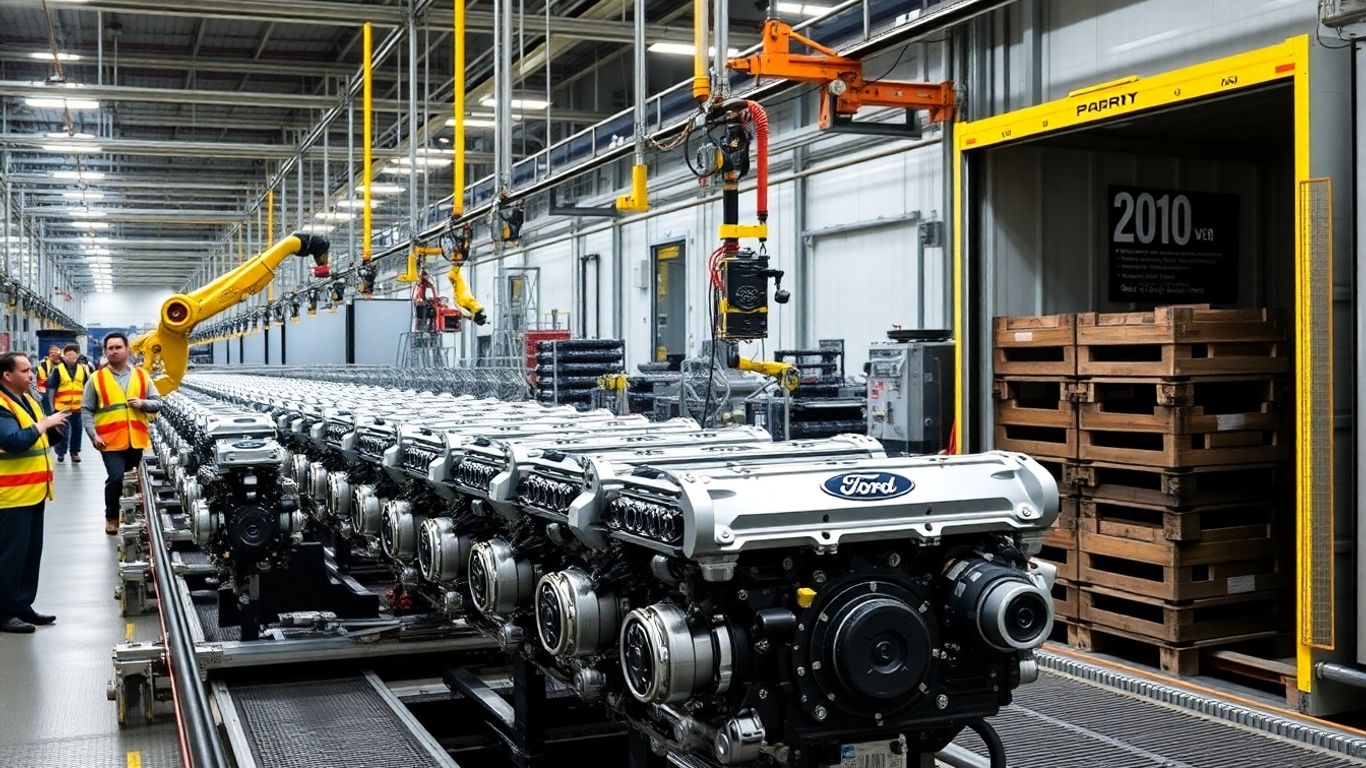
Pick an engine supplier, and you’ve basically picked how a repair goes, how fast a part shows up, and how the car feels after years of heat cycles. It sounds far from the showroom, but it hits the service lane fast. The supplier lineup quietly decides how smooth your repair and ownership experience will be.
When parts and calibrations land on time, wrench time drops and cars get back to their owners quicker.
Serviceability, Parts Availability, And Lead Times
Dealers live and die by parts flow and repair predictability. Good sourcing means common fasteners, clear service manuals, and diagnostics that actually match what’s under the hood. It also means parts that fit across trims and model years, so a dealer isn’t juggling five nearly identical hoses or sensors. When suppliers hold tight tolerances and stick to shared specs, you get fewer comebacks, less chasing phantom faults, and a lot less overnighting from a distant warehouse.
Lead times are where the supplier choice stings or saves you. Fast-moving items—filters, plugs, O2 sensors—should be on the shelf. The pain shows up in long‑tail pieces: oddball coolant tubes, turbo wastegate actuators, high‑pressure pumps. If the engine bill of materials was built with too many unique parts, backorders stretch out. Reman engines help when a short block is cooked, but that only works if cores, test stands, and software keys are aligned with the supplier’s build. Packaging and hot-run testing matter too; fewer dead-on-arrival engines mean one tow, one repair, done.
| Metric | Dealer target | Typical (stable) | During disruption |
|---|---|---|---|
| Parts fill rate within 24 hours | 90%+ | 88–95% | 60–75% |
| Long‑tail component lead time (days) | ≤7 | 5–12 | 20–45 |
| Drop‑in engine replacement cycle (days) | ≤3 | 2–4 | 7–14 |
| Core credit posted (days) | ≤10 | 7–12 | 15–30 |
Warranty Coverage, Campaigns, And Field Fix Protocols
Warranty feels simple to the driver—fix my car, no runaround—but it sits on top of contracts with the engine supplier. When the supplier tracks every batch and shares data fast, the dealer gets clear fault codes, pre‑authorization rules, and a repair kit that actually solves the problem. That keeps the job to one visit instead of two. In practice, service writers check VINs for campaigns, then pull the right TSB steps, software level, and parts bundle. If the issue needs new calibration, a clean flash with the exact engine family ID avoids drivability drama.
When quality alarms hit, speed beats spin. Good suppliers push out containment steps, lot codes to block, and an interim fix the same day, along with fair labor times and tow/rental guidance. Drivers care about basics: the car gets towed, the fix sticks, and the promise on paper matches what happens at the counter. Clear rules on modified vehicles and tune flags reduce arguments. The best outcome is boring: one authorization, one repair, and the customer leaves without a rattle or a warning light.
Performance Consistency Across Global Markets
Engines travel, and fuels don’t. That’s why the same block can feel slightly different in Michigan, Mexico City, or Munich. Calibrations shift for octane, ethanol blends, sulfur levels, altitude, and temperature. A smart sourcing plan keeps the hardware common but lets software do the local tailoring. You might see a few horsepower swing on the spec sheet, or a narrower torque plateau, to meet local emissions and fuel knock limits. What should not swing is the character: cold starts that don’t flare wildly, smooth idle with the A/C on, and power that doesn’t fall off a cliff on a hot climb.
Dealers notice this in service mode too. A shared global parts bin means the same injector or turbo core fits multiple regions, while the ECU code matches the local fuel. Drivers notice it on the road. Towing on E10 at sea level should feel like commuting on E20 a mile up—steady, predictable, and quiet enough that you think about the trip, not the engine.
Wrapping It Up
So, when you think about your Ford, remember it’s not just the folks at Ford. There’s a whole network of companies working behind the scenes. These suppliers are the backbone, making sure those engines get built right. It’s a big operation, and knowing who these key players are gives you a better picture of how your car actually comes to life. Pretty interesting stuff, right? It makes you appreciate the engineering and the people involved a bit more.